Equipping CTE, STEM, and Makerspaces for Hands-On Success
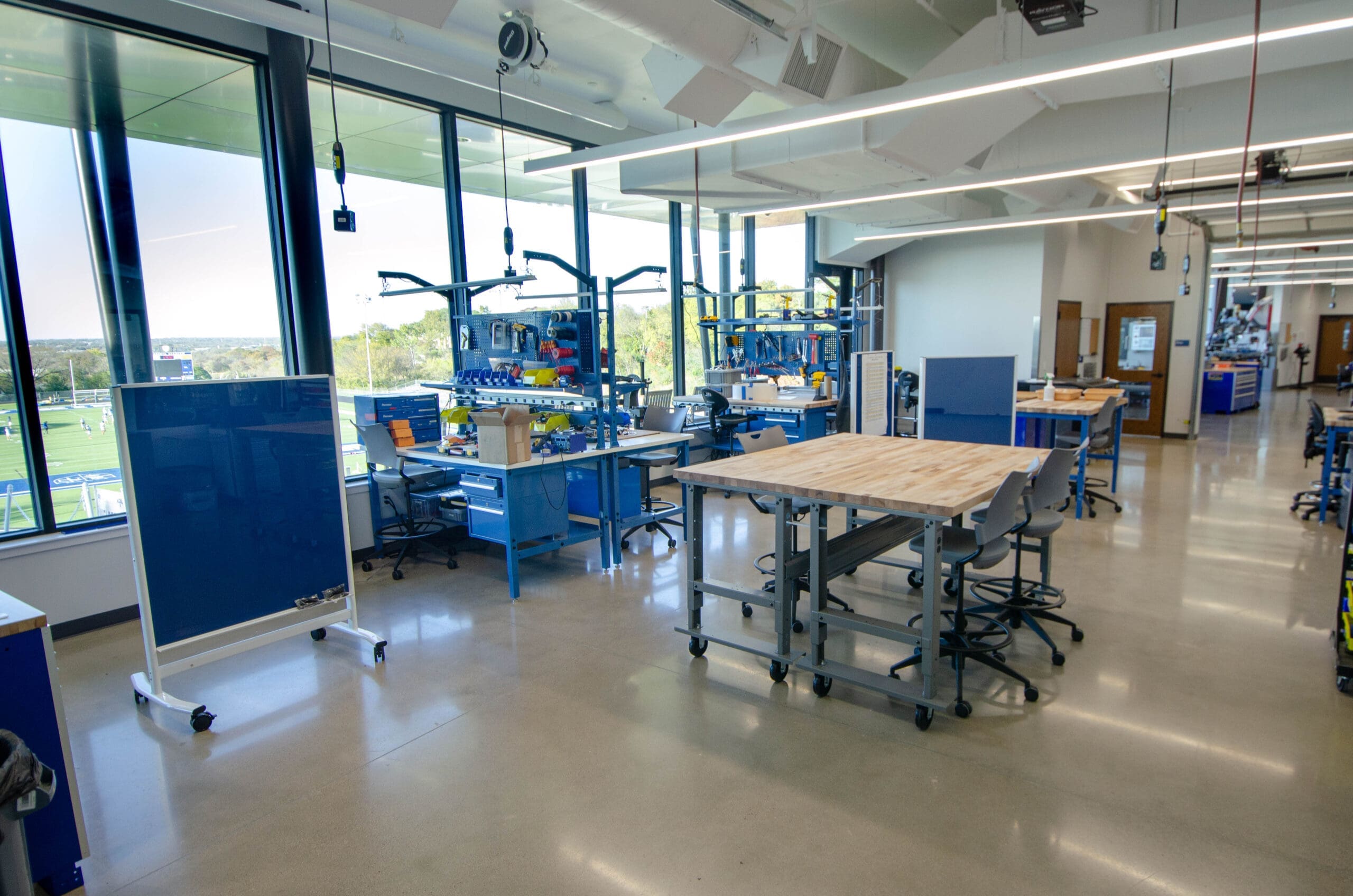
Schools across the state of Texas are continuing to prioritize career college and career readiness, and classrooms are evolving into dynamic workshops, advanced laboratories, and collaborative makerspaces to keep pace. These spaces are the hub of Career and Technical Education (CTE) and STEM programs, and serve a fundamentally different purpose than standard classrooms.

Can I use the same furniture from my classrooms for CTE and STEM spaces?
While there’s some crossover in how these spaces are furnished, and all modern learning environments require furniture that supports active engagement, CTE and STEM labs place a unique and intensified set of demands on every surface, seat, and storage unit. In these spaces, furniture becomes an integral part of the hands-on work itself, requiring an exceptional level of flexibility, durability, and safety to be effective.

The physical environment of a makerspace or lab directly impacts the quality of student engagement and the ability to conduct project-based learning effectively.
“Key factors identified include flexibility and adaptability, ambient conditions, furniture and spatial layout … and the integration of technology and innovative tools.”
Lebasi, A. & Talischi, G. (2024). The Impact of Physical Learning Environments on Creativity in Educational Settings: A Systematic Review. International Journal of Architectural Engineering & Urban Planning, 34(2). DOI: 10.22068/ijaup.841
1. Durability and Material Integrity in Lab Environments
Safety and longevity are paramount in spaces where students work with chemicals, tools, and heavy equipment. Standard classroom desks and tables are simply not equipped for these demands.
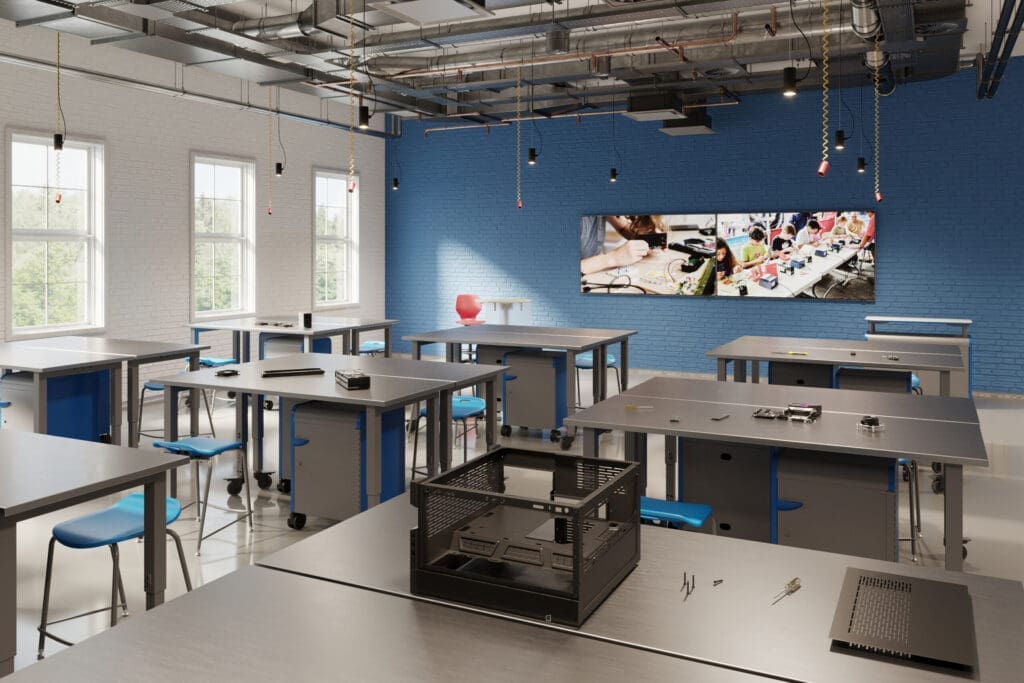
Smith System CTE Mechanics Room
2. Fostering Collaboration Through Flexible Design
Collaboration is at the heart of modern technical and scientific work. The design of a STEM lab or makerspace should actively encourage teamwork rather than isolate students.
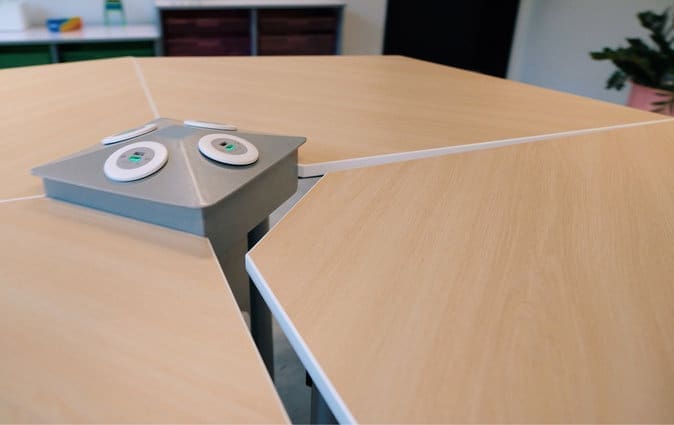
Research into active learning spaces shows that flexible and mobile furniture arrangements are key to fostering collaboration. Instead of fixed, forward-facing stations, effective CTE spaces utilize:
3. Integrated and Accessible Storage
In a space filled with specialized tools, sensitive equipment, and in-progress projects, effective storage is critical for both organization and safety. A cluttered or disorganized lab can be a hazardous one.
Proper storage solutions go beyond simple shelving. An effective CTE classroom requires:
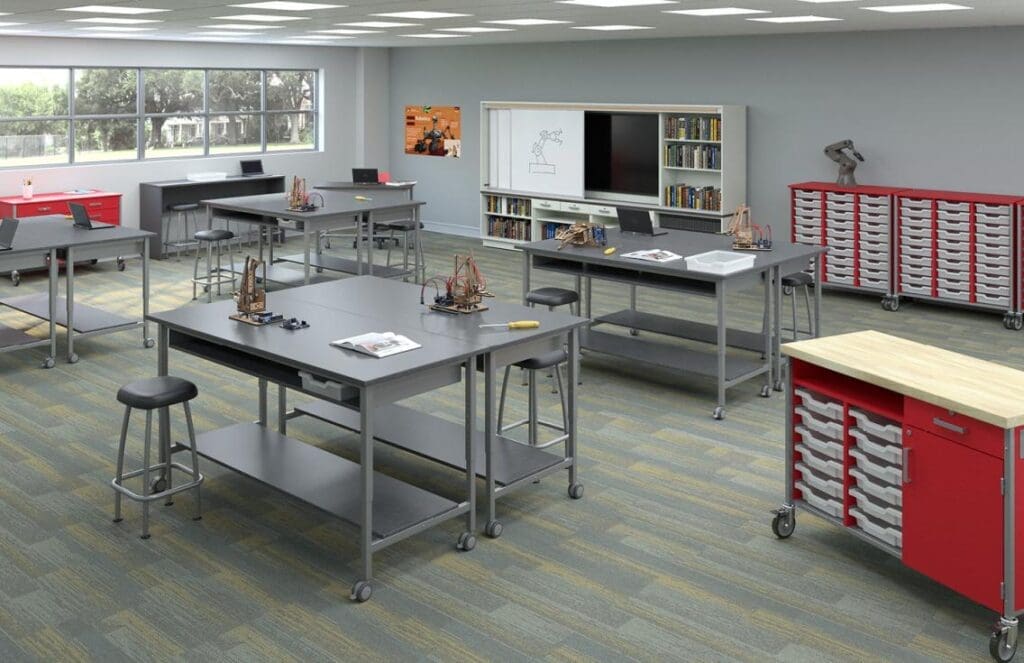
The design of a CTE or STEM facility is a direct investment in preparing students for high-demand careers. By selecting furniture that is purpose-built for these hands-on environments, schools create safer, more effective, and more engaging learning spaces. The right lab bench, mobile workstation, or storage system is a critical tool that empowers students to build the skills that will power the future of the Texas economy.
Citation:
Kay, L., & Buxton, A. (2023).
Makerspaces and the Characteristics of Effective Learning in the early years.
Journal of Early Childhood Research, 22 (3), 343-358.
https://doi.org/10.1177/1476718X231210633
(Original work published 2024)