How does classroom design impact teachers?
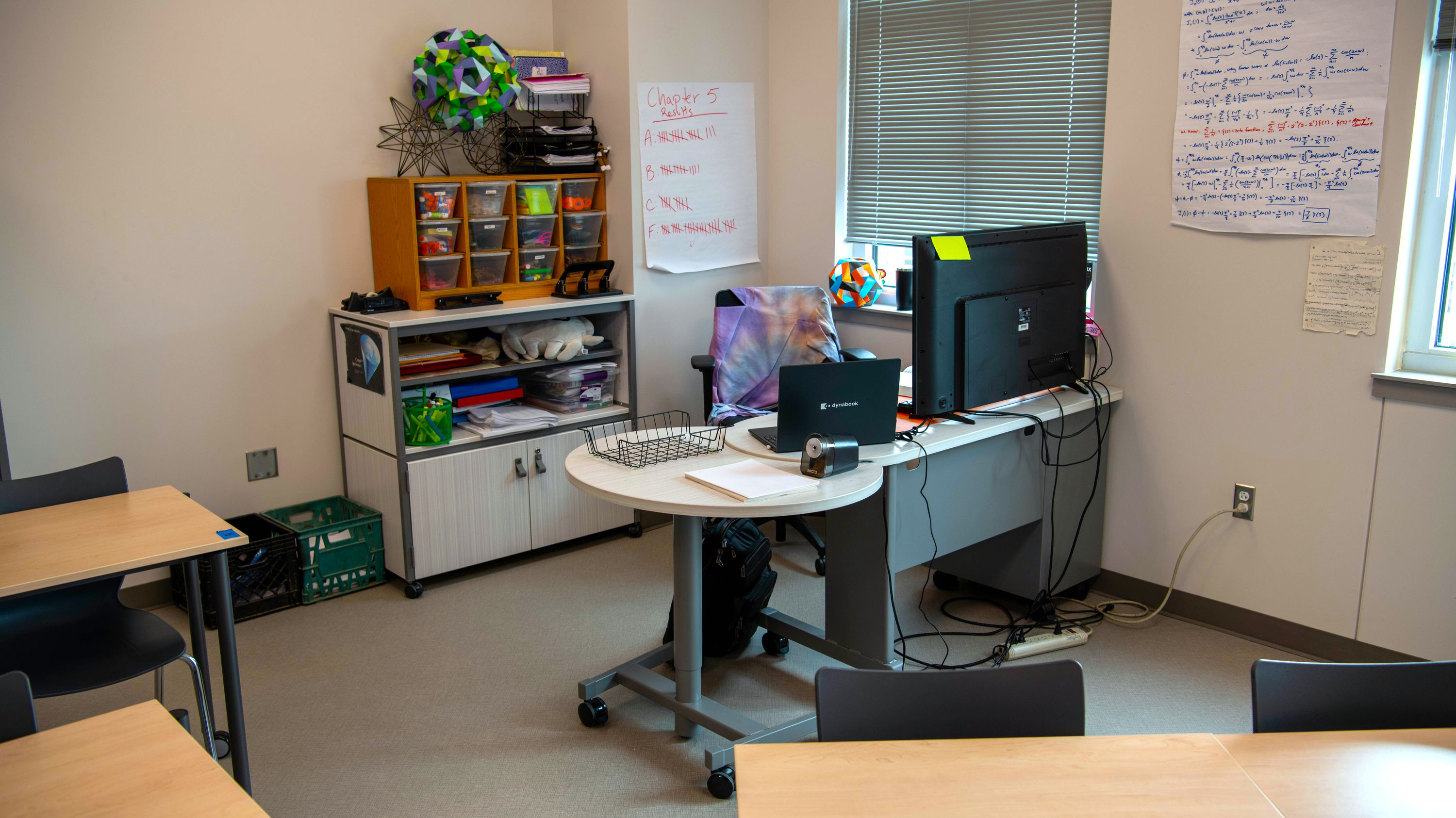
Henry Adams once said, “A teacher affects eternity; he can never tell where his influence stops.” Yet we know exactly where it starts: in the classroom. We’ve shared a lot of data about how classroom design impacts students, but how often do we consider the impact a learning space has on the teacher?
A 2020 review of over 80 studies published in The International Journal of Architectonic Spatial and Environmental Design examined the relationship between school facilities and academic performance. One study cited in the review revealed that 40% of teachers reported their productivity was negatively impacted by poor spatial layout, forcing them to waste valuable time and energy simply making the space work for them.
So, what can we do to create optimal classrooms for teachers?
While the full body of research offers many nuances, the primary takeaway is simple: give teachers ownership of a flexible space. Teachers need to feel a sense of belonging in their rooms—like long-term homemakers rather than temporary tenants. They need to know their belongings are secure, and they require the freedom and capability to rearrange the space as their lesson plans dictate.
To evaluate these physical workspace needs, the 2020 review utilizes the Habitability Pyramid—a conceptual framework similar to Maslow’s Hierarchy of Needs:
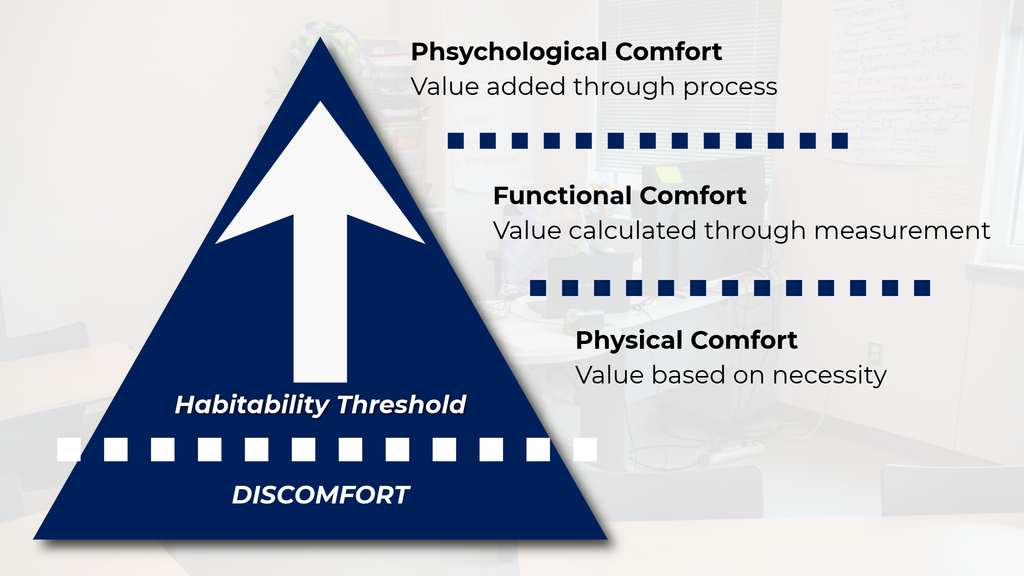
Physical Comfort
(The Threshold)
The bare minimum level where basic physical needs are met. A room with nowhere to sit, hard floors, and no surfaces for basic tasks falls below this threshold.
Functional Comfort
(Calculated Utility)
Beyond basic shelter, functional comfort ensures a space has the exact number of seats needed, surfaces appropriate for classroom activities, and clear paths for safe navigation.
Psychological Comfort
(Intentional Design)
The top tier of the pyramid. This occurs when occupants feel the layout was created through a thoughtful, intentional process—where a professional consulted end users to deeply understand their daily needs and designed the space to accommodate them.
How do we achieve psychological comfort in a classroom?
While basic physical and functional comfort can often be solved with simple room dimensions and headcount data, achieving psychological comfort requires addressing the teacher’s core needs: flexibility and ownership.
Flexibility
Flexibility elevates functional comfort. It ensures furnishings can be easily moved and reconfigured for smooth classroom traffic and seamless group activities. In fact, more than a quarter of teachers in one study noted that a lack of layout flexibility strongly hindered their productivity due to the time required for daily setup.
Ownership
Ownership stems from empowerment and security. Flexible furniture is useless if instructors are required to keep it in rigid, pre-approved configurations. True ownership means having the freedom to personalize the space—and it relies on practical details, like personal storage. Research shows that teachers who lack locking storage at their workstations feel a significantly reduced sense of belonging.
How Lone Star Furnishings Delivers Full Comfort
At Lone Star Furnishings, our mission is to support all three levels of the Habitability Pyramid.
Anyone can achieve basic physical comfort by ordering chairs online, but that ignores the functional layout of a learning environment. Competitors may occasionally achieve functional comfort by laying out a basic floor plan. We go further.
Our collaborative teams—comprising an Educational Furniture Consultant, an Interior Designer, and a Project Coordinator—work directly with educators. We don’t just ask what fits in a room; we discover what satisfies the psychological and practical needs of both students and instructors.
We understand these needs not only through research and data, but through lived experience. Our team includes former educators, relatives of teachers, and parents of students actively attending public schools. We have a personal stake in public education, and we use that insight to do more than put seats in a room: we design spaces where both teachers and students thrive.
References & Citations
- Quote: Adams, H. (1907). The Education of Henry Adams. Houghton Mifflin Company.
- Systematic Review & Habitability Pyramid: Vischer, J. C., & Wi-Fi, M. (2020). Physical Comfort and Productivity in Educational Spaces: A Review of Literature on Spatial and Environmental Design. The International Journal of Architectonic, Spatial and Environmental Design, 14(2), 15–31.
- Teacher Productivity & Spatial Layout: Earthman, G. I. (2002). Prioritizing School Facility Inadequacies in Relation to Student Achievement. Building Minds, Minding Buildings: School Facilities Condition and Student Performance. Center for Urban Development and Research.
- Psychological Comfort & Belonging in Workspace: Vischer, J. C. (2008). Towards an Environmental Psychology of Workspace: How People are Affected by Environments for Work. Architectural Science Review, 51(2), 97–108.