The Learning Environment is the Third Teacher
“There are three teachers of children: adults, other children and their physical environment.” — Loris Malaguzzi
Loris Malaguzzi was a revolutionary educator whose philosophies were rooted in the soil of post-war Italy. Malaguzzi was inspired when he saw a group of his countrywomen begin to build a new school in a war-torn village, and he joined them in the construction. The experience connected him with the physical environment of the school in a way that would change pedagogy forever.
Children, he understood, are competent, creative, curious, and have learning built into their very nature; a nature which drives them to take instruction from their elders and collaborate with their peers. The learning environment itself must be designed to support that nature, or the students’ education is stifled.
These ideas came to be known as the Reggio Emilia approach, named for the city where it was created. It evolved over the following decades, helping take primary education from a perfunctory state program to a field of study dedicated to creating new generations of well-educated critical thinkers.
In 2010, three firms put their resources together to study Malaguzzi’s philosophies and create guidelines on how to apply them to classroom design in the 21st century. The Third Teacher was published as a collaboration between VS America, CannonDesign, and Bruce Mau Design, and is a valuable resource to educators everywhere. In this blog, we’ve partnered with VS to share some of the book’s insights.
Agile Classrooms
Agile spaces are a pillar of every environment utilizing VS furniture solutions. Agility means these spaces are in motion, allowing students to easily and comfortably adapt as their needs change throughout the day—whether that means transitioning between a sitting and standing-height desk, or moving seamlessly between distinct physical zones in the room.
Individual Workspaces
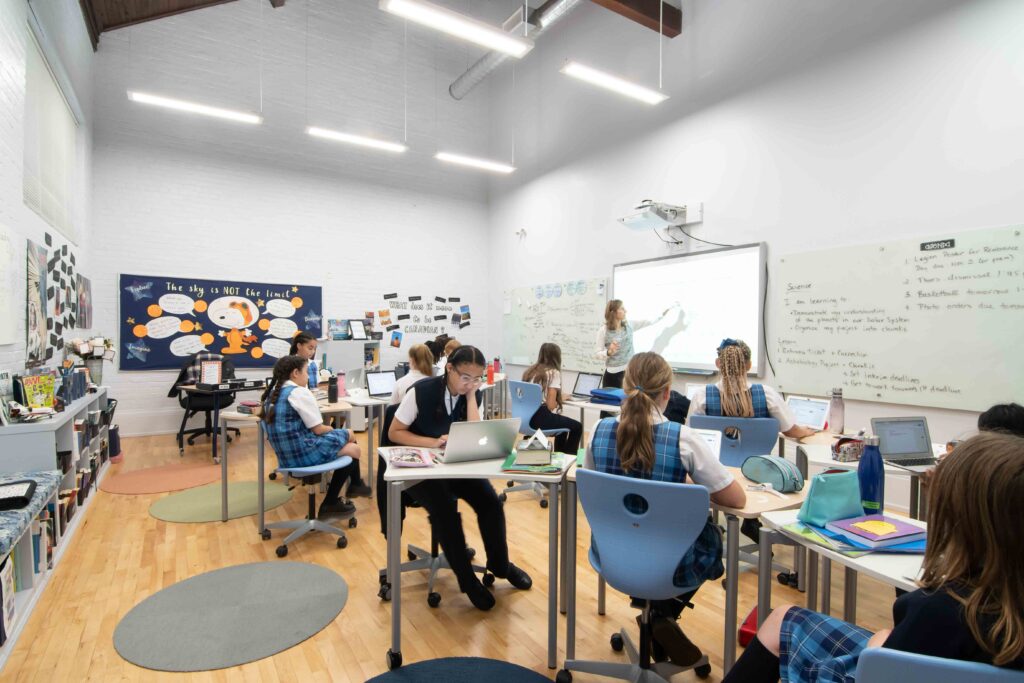
Modern conversations surrounding classroom design and pedagogy often focus on collaborative group learning. However, individuality remains a critical component of a well-designed classroom. Students need quiet spaces that are conducive to independent study without cutting them completely off from their peers.
While the historical front of classroom spaces do allow one desk/one student, today’s student benefits from a more 360 degree approach as shown here. Shown here, are the Thumbprint desks and Panto Move seating. The students can not only turn easily to make any space “front of room” and follow the conversation, it opens site lines and increases flexibility to the next activity.
Group Workspaces
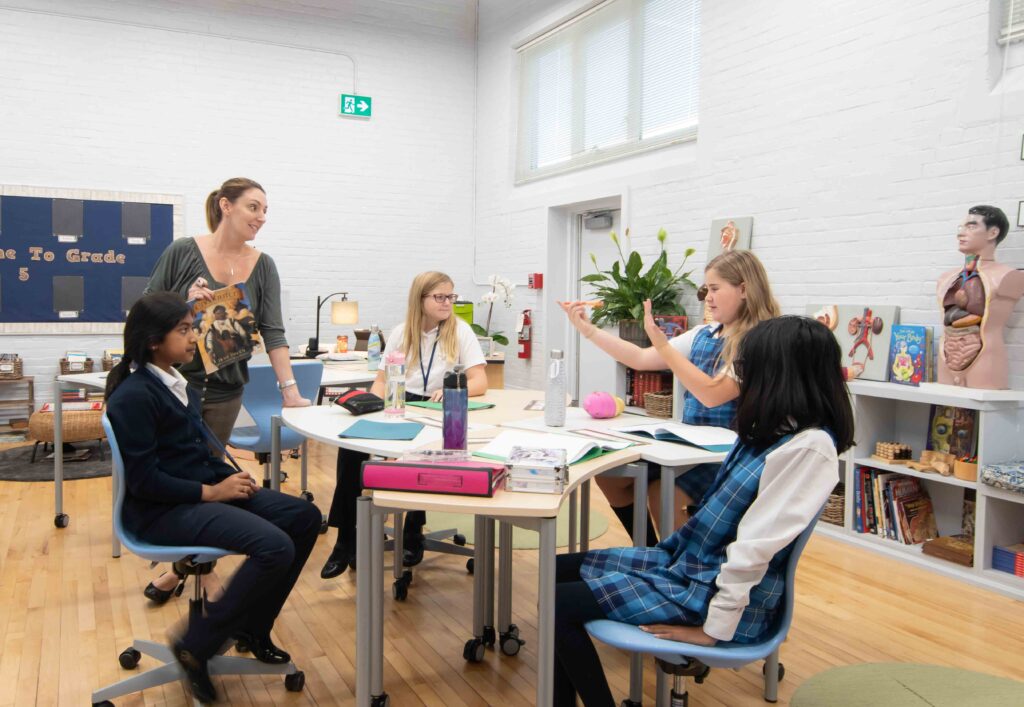
While students take instruction from adults, they develop their knowledge and social skills among other children. Spaces that facilitate collaboration allow students to share their unique strengths, identify areas for personal development, and emulate the skills of their classmates—making these areas vital for cooperative growth.
Quickly going from Individual to group work is a rapid transition utilizing the same desks with wheelbarrow casters, achieving unlimited configurations, appropriate proxemics and maintaining the increased visibility and site lines.
Presentation Spaces
Teachers are no longer fixed to a chalkboard at the front of the classroom, yet there will always be a functional need for presentation zones. These spaces are flexible: they host direct instruction from the educator or serve as a platform for a student sharing their individual project or group work with the rest of the class.
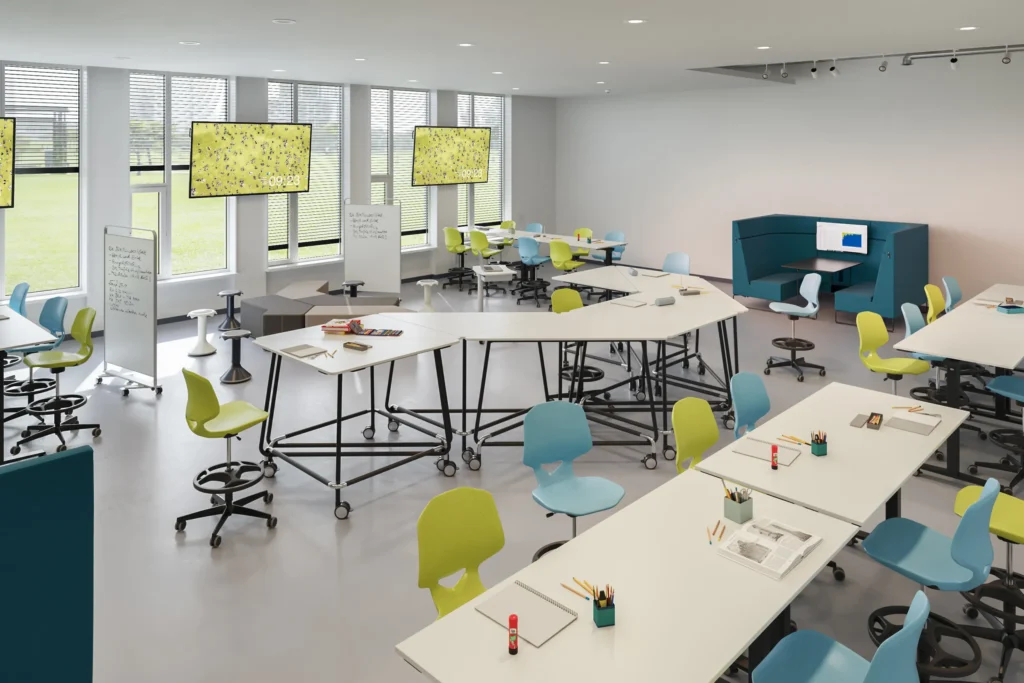
Addition of technology is a few strategic places expands the ability for students to follow information from anywhere in the room. With the high costs of technology, minimizing the multitude of visual aides through agility within the furniture, achieves a timeless and future proof solution
Quiet Retreat Workspaces
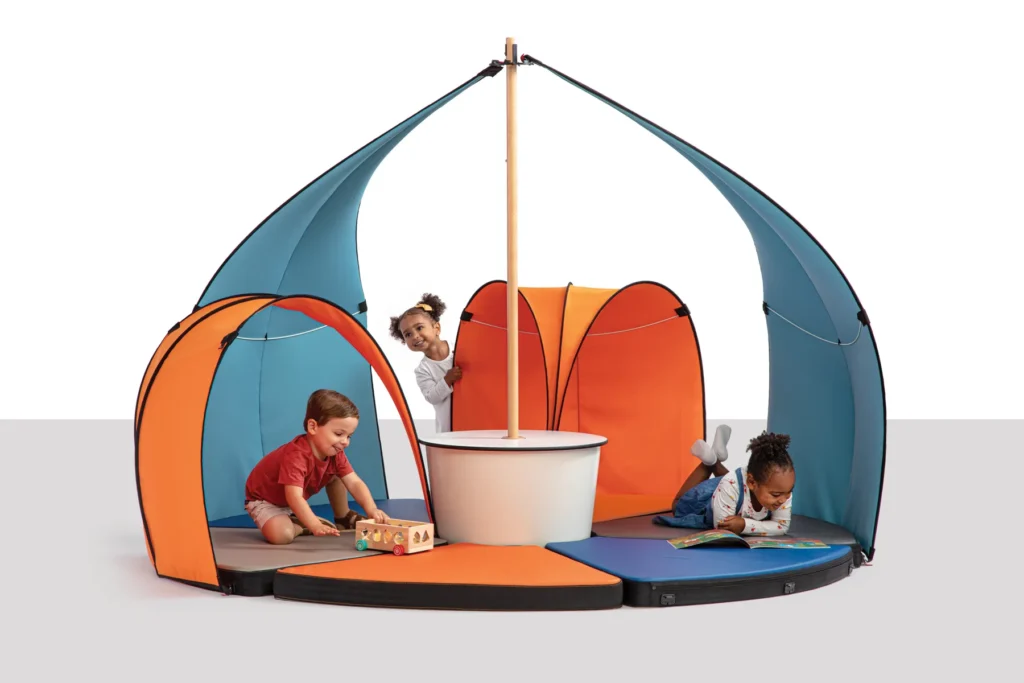
Part of understanding the effect of the physical environment on learning outcomes is understanding the science of sensory stimulation. Students of all ages have different sensory thresholds, and an agile classroom intentionally accounts for those who need a low-stimulation, quiet place to focus within a larger, high-energy learning environment.
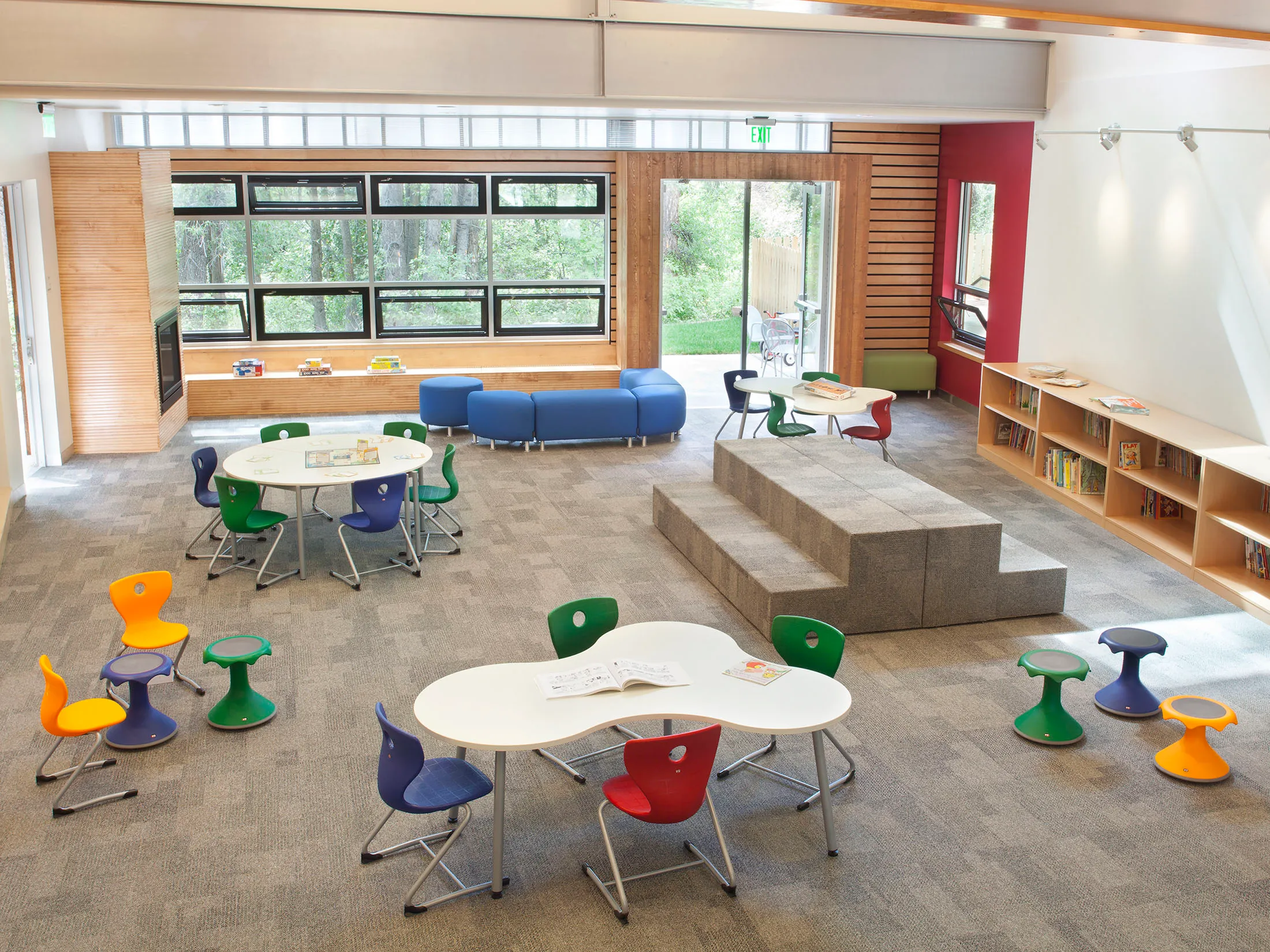
The same area that can be used for group activities, casual conversations can also allow for some quiet spaces and separate without being disengaged. This allows the instructor to see the student and offer assistance and support as needed, while giving the student recharge time. Shown here is the Leaf and Landscape product for floor level learning. The same result can be achieved through Landscape benches, mats and Shift + bookcases.
Learning Spaces are Everywhere
When was the last time you thought about your hallways as instructional spaces? District leaders are asked to find the most value in every square foot in the building. Much attention is rightfully paid to classrooms, libraries, and cafeterias, but learning shouldn’t be limited to traditional spaces. Each corridor offers opportunities to create workspaces and collaboration zones.
Students spend between thirty minutes and an hour in the hallways each day, and they are in motion during that time. Neuroscience has repeatedly confirmed a link between walking, thinking, and creativity. In a flash of inspiration, a student may need to immediately stop, sit down, and open a book to validate their sudden epiphany. Or they might need an accessible worksurface to quickly jot a thought down before it escapes them. Or, perhaps, they need a soft seating breakout space where they can pull together a rapid, small-group discussion to debate it.
The design of your school shouldn’t just accommodate these possible learning scenarios, it should intentionally and explicitly encourage them. The entire architecture should inspire students to move and change; their location, their position, the type of work they’re doing. Every choice should meet the students where they are and guide them even further.
VS America’s Series Lounge Seating Collection offers endless style, comfort, and function with a range of upholstered furniture – chaise lounges, armchairs, sofas, and benches, in two different heights. Alongside their many lines of agile seating, worksurfaces, and storage, you can design a space customized for your students and your building.
Work with a Lone Star Furnishings Educational Furniture Consultant to design that space and put your Third Teacher to work.